
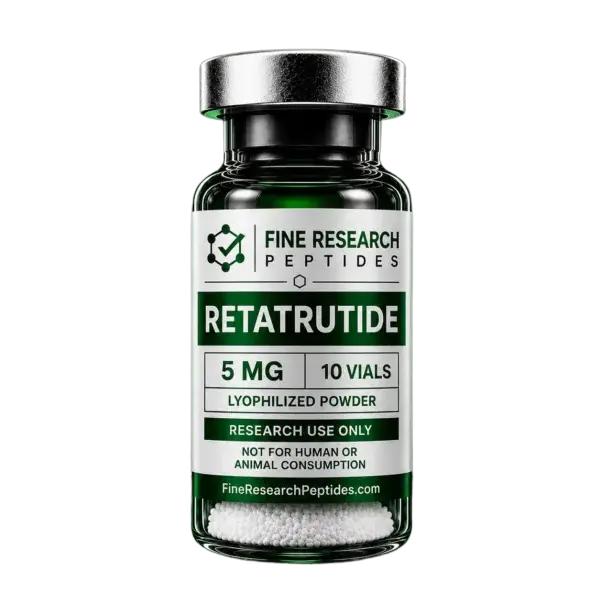
High-purity Retatrutide (LY3437943) research peptide. Triple GLP-1, GIP, and glucagon receptor agonist. 99%+ HPLC verified. Independent third-party COA available before you order. USA domestic shipping with tracking on every order. For laboratory research use only.
10-30mg per vial
2–3 Business Days from Texas
Weekly doses starting at 2mg and increasing to 8mg
Note: BAC Water is required for reconstitution with all research peptides
Across the United States
Lab Verified
GMP Certified
Looking for a high-purity Retatrutide peptide for your research? Fine Research Peptides supplies Retatrutide (LY3437943) as a research use only compound for USA laboratory researchers, with every batch independently verified for identity and purity by HPLC and mass spectrometry analysis before dispatch. Whether you need a single vial for preliminary work or are sourcing across an extended multi-stage protocol, you can buy Retatrutide online in the USA with documented, independently verified quality behind every order.
All Retatrutide products are intended for laboratory research use only. Not for human or animal consumption.
Retatrutide, development code LY3437943, is a 39-amino acid synthetic peptide that functions as a triple hormone receptor agonist, simultaneously activating the GLP-1 receptor, the GIP receptor, and the glucagon receptor. This triple receptor mechanism distinguishes it from dual agonist compounds and makes it one of the most mechanistically sophisticated research tools currently available through compliant RUO research channels in the USA.
Retatrutide is conjugated to a fatty diacid moiety that binds albumin in plasma, extending its half-life to approximately six days and enabling once-weekly administration in clinical research protocols. This extended half-life results from the same depot-forming mechanism used in other long-acting peptide research compounds and has significant implications for protocol design in extended metabolic research studies.
Retatrutide is an investigational compound currently in Phase 3 clinical development under the TRIUMPH program. It is not approved by the FDA for any indication. Outside of clinical trials, it is handled strictly as a research reference compound. Fine Research Peptides supplies Retatrutide solely as a high-purity research compound for qualified laboratory research and never for diagnostic, therapeutic, or human use. For the full regulatory context governing research peptide supply in the USA, see our RUO peptides guide and our peptides illegal guide.
The research significance of Retatrutide’s triple receptor mechanism becomes clear when each receptor system’s contribution to metabolic biology is understood independently.
GLP-1 receptor agonism drives the foundational incretin effects shared across the GLP-1 compound class: appetite-related hypothalamic signaling reduction, slowed gastric emptying, and glucose-dependent insulin secretion from pancreatic beta cells. Retatrutide engages the GLP-1 receptor at approximately 0.4 times the potency of endogenous GLP-1.
GIP receptor agonism adds a second incretin mechanism through receptors expressed in both pancreatic and adipose tissue. Retatrutide’s GIP receptor engagement is particularly notable at approximately 8.9 times the potency of endogenous GIP, the highest GIP receptor engagement reported for any compound in the published triple agonist class. GIP receptor activation in adipose tissue has been studied for its role in fat storage and mobilization regulation, contributing to the visceral fat reduction findings in published metabolic research [1].
Glucagon receptor agonism provides the third and mechanistically novel component, directly increasing hepatic fat oxidation, elevating energy expenditure, and driving lipolysis in adipose tissue. In body composition research, glucagon receptor co-engagement produces hepatic fat reduction effects that neither GLP-1 nor GIP agonism alone can replicate [2].
For a comprehensive research overview of how all three receptor systems interact in metabolic research models, see our full Retatrutide research guide.
The primary published research evidence base for Retatrutide comes from a Phase 2 randomised controlled trial published in the New England Journal of Medicine in 2023 [2]. This double-blind, placebo-controlled trial enrolled 338 adults with obesity across multiple USA clinical sites and examined dose-response relationships over 48 weeks.
Body weight reduction findings at 48 weeks:
At the primary 48-week endpoint, mean percentage body weight reductions from baseline were 8.7% in the 1mg group, 17.1% in the combined 4mg group, 22.8% in the combined 8mg group, and 24.2% in the 12mg group, compared to 2.1% in the placebo group [2]. At the highest dose, 100% of participants achieved at least 5% weight reduction, 93% achieved at least 10%, and 83% achieved at least 15% weight reduction. These are the largest body weight reductions reported in any Phase 2 obesity trial in the published literature.
Hepatic fat findings:
A substudy published in Nature Medicine in 2024 [3] examined Retatrutide’s effects on liver fat in participants with metabolic dysfunction-associated steatotic liver disease. Results showed up to 82% reduction in liver fat with Retatrutide treatment. More than 90% of participants with obesity and liver fat accumulation achieved liver fat normalisation in the highest dose group, reflecting the combined hepatic fat oxidation effect of GLP-1, GIP, and glucagon receptor co-activation.
Glycaemia and cardiometabolic endpoints:
The Phase 2 trial also reported that 72% of participants with prediabetes at baseline reverted to normoglycaemia during Retatrutide treatment [2]. LDL cholesterol reductions of approximately 20% were documented alongside blood pressure improvements across treatment groups.
A 2024 network meta-analysis published in the journal Metabolism ranked Retatrutide highest among GLP-1 class agents for weight loss endpoints in a comparison that explicitly included Tirzepatide [4], confirming the additive contribution of glucagon receptor engagement to metabolic research outcomes.
For researchers comparing Retatrutide and Tirzepatide in parallel study designs, see our peptides for fat loss and muscle gain research guide.
Fine Research Peptides stocks Retatrutide in four research quantities so you can match your supply to your protocol scale:
Retatrutide 5mg: Ideal for preliminary in-vitro assay work, pilot study designs, or researchers entering Retatrutide biology for the first time and establishing protocol parameters before scaling up.
Retatrutide 10mg: The most common mid-range research quantity, providing sufficient material for multi-session in-vivo rodent studies or multi-replicate cell-based assay designs.
Retatrutide 20mg: Suited to extended or multi-stage research protocols requiring consistent batch material across multiple experimental sessions.
Retatrutide 30mg: Best value per milligram for larger research programs, multi-arm comparative study designs, or institutional procurement covering multiple research groups.
Every vial, 5mg, 10mg, 20mg, and 30mg, is supplied as a lyophilized powder and held to the same 99%+ purity standard verified by independent third-party HPLC and mass spectrometry analysis.
Researchers evaluating where to buy Retatrutide in the USA should consider the following specific quality and compliance criteria that distinguish compliant RUO suppliers from unverified sources.
Our Retatrutide is independently analyzed by a USA-based third-party laboratory using HPLC and mass spectrometry analysis. Self-generated documentation from a vendor’s own facility is not independent verification. Every COA we provide comes from a named external laboratory. You can review all documentation on our lab certifications page before placing your order.
All orders ship domestically from within the USA with tracking on every order. Domestic shipping eliminates the international temperature excursion risk and customs complications that affect compound integrity from overseas sources.
Every product page, article, and communication from Fine Research Peptides maintains correct Research Use Only framing. Our content does not make human benefit claims. Our labeling is consistent and compliant. This matters because the FDA enforcement actions of 2025 and 2026 specifically targeted vendors whose RUO labeling was inconsistent with their marketing. For quality verification guidance, see our how to verify research peptide quality guide.
For current pricing across the full catalog, see our peptide pricing guide. COA documentation is available before you order, not only after.
Retatrutide is supplied as a lyophilized powder requiring reconstitution with bacteriostatic water before laboratory use. The reconstitution process follows standard lyophilized peptide protocol.
Common reconstitution reference volumes:
The correct solvent volume for your specific protocol depends on the target concentration your study design requires. Use our free peptide calculator to calculate the exact volume before reconstituting. Fine Research Peptides carries bacteriostatic water in sterile sealed 10ml vials alongside Retatrutide for complete reconstitution setup.
For the full step-by-step laboratory reconstitution protocol covering aseptic technique, dissolution method, and storage guidance, see our peptide reconstitution guide. For guidance on bacteriostatic water as the standard reconstitution solvent, see our BAC water guide.
Storage: Store lyophilized Retatrutide at -20°C before reconstitution and protect from light and moisture. After reconstitution, refrigerate at 2 to 8°C and use within 28 days. Do not freeze a reconstituted Retatrutide solution and do not shake the vial during dissolution.
Researchers building comprehensive metabolic or body composition study panels frequently include Retatrutide alongside related compounds for comparative or complementary pathway coverage.
For dual vs triple receptor agonism comparison research: Tirzepatide is the natural dual GIP and GLP-1 receptor agonist comparator for isolating the incremental contribution of glucagon receptor engagement. Both are available in our weight management research range.
For GH axis and visceral fat research: Tesamorelin covers the GHRH receptor and IGF-1 signaling pathway in a mechanistically distinct approach from incretin-based compounds. See our Tesamorelin peptide research guide.
For NNMT inhibition and fat cell biology: 5-Amino-1MQ provides a mechanistically distinct NNMT inhibition approach to adipose tissue research alongside receptor agonist study arms.
For longevity and mitochondrial metabolism: MOTS-C and NAD+ from our longevity research range complement Retatrutide in panels examining metabolic aging alongside receptor pharmacology endpoints.
For a complete compound reference across all research categories, see our list of research peptides and what they do and our full research guide.
Ordering is straightforward. Select your vial size above, 5mg, 10mg, 20mg, or 30mg. Add to cart and proceed to checkout. You will receive an order confirmation by email once payment is processed. Tracking details are emailed when your order is dispatched from within the USA.
Before ordering, you can review COA documentation for the current batch on our lab certifications page. For any pre-order questions, visit our FAQs or reach us through our contact page. Learn more about Fine Research Peptides on our about page.
Browse our bestseller compounds or our complete injectables range. For researchers exploring other metabolic research compounds, see our full weight management category.
Retatrutide (LY3437943) is a 39-amino acid investigational synthetic peptide that simultaneously activates the GLP-1, GIP, and glucagon receptors as a triple agonist. Its GIP receptor potency at approximately 8.9 times endogenous GIP activity is the highest reported in the triple agonist class. The Phase 2 NEJM trial (n=338, 48 weeks) reported 24.2% mean weight reduction at the highest dose. It is supplied by Fine Research Peptides for laboratory research use only and is not intended for human or animal consumption.
You can buy Retatrutide peptide online directly through Fine Research Peptides. We are a USA-based compliant RUO supplier shipping domestically with tracking on every order. Independent COA documentation is available before you order. All vial sizes, 5mg, 10mg, 20mg, and 30mg, are in stock at 99%+ purity.
Yes. Our Retatrutide is independently tested by a USA-based third-party laboratory using HPLC and mass spectrometry analysis. A batch-specific COA is available for review on our lab certifications page before you place your order. We do not rely on self-generated documentation.
We stock Retatrutide in 5mg, 10mg, 20mg, and 30mg lyophilized vials, all at 99%+ purity verified by independent third-party analysis.
Add bacteriostatic water slowly along the inside wall of the lyophilized Retatrutide vial and gently swirl until fully dissolved. For a 10mg vial, adding 2ml produces a 5mg/ml solution. Use our peptide calculator to calculate the exact volume for your target concentration. Store at 2 to 8°C after reconstitution and use within 28 days.
No. Retatrutide is an investigational compound in Phase 3 clinical development under the TRIUMPH program and is not FDA approved for any indication. It is supplied strictly for laboratory research use only through Fine Research Peptides under the Research Use Only framework.
Tirzepatide is a dual GIP and GLP-1 receptor agonist. Retatrutide adds glucagon receptor agonism as a third mechanism that drives additional hepatic fat oxidation and energy expenditure effects. In published Phase 2 data, Retatrutide at the highest dose produced 24.2% mean weight reduction at 48 weeks. A 2024 Metabolism network meta-analysis ranked Retatrutide highest among GLP-1 class agents for weight loss endpoints in a comparison including Tirzepatide. Both are available at Fine Research Peptides for parallel research designs.
All products supplied by Fine Research Peptides are strictly for laboratory and research use only. Retatrutide is not intended for human or animal consumption. It is an investigational compound and is not approved by the FDA for any indication. All published research findings referenced on this page are drawn from peer-reviewed clinical trial literature and do not constitute therapeutic claims, health benefit statements, or medical guidance. Researchers are responsible for ensuring full compliance with all applicable local, state, and federal regulations governing the purchase, storage, and use of research compounds in their jurisdiction.
Retatrutide is primarily used to study:
Clinical studies assess weekly doses starting at 2mg and increasing to 8mg or more, over a 12–24 week period.
Research shows significant reductions in body fat, waist circumference, and fasting glucose levels.
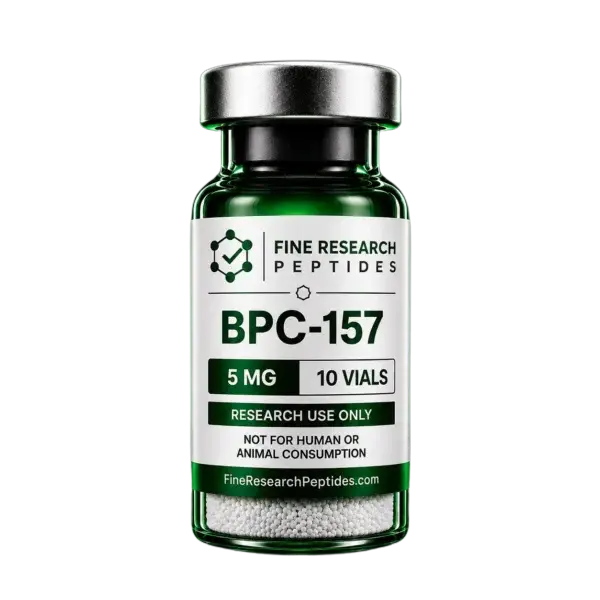
Every lot of BPC-157 is tested by an independent U.S. laboratory. Match the lot number on your label to its report, any time.

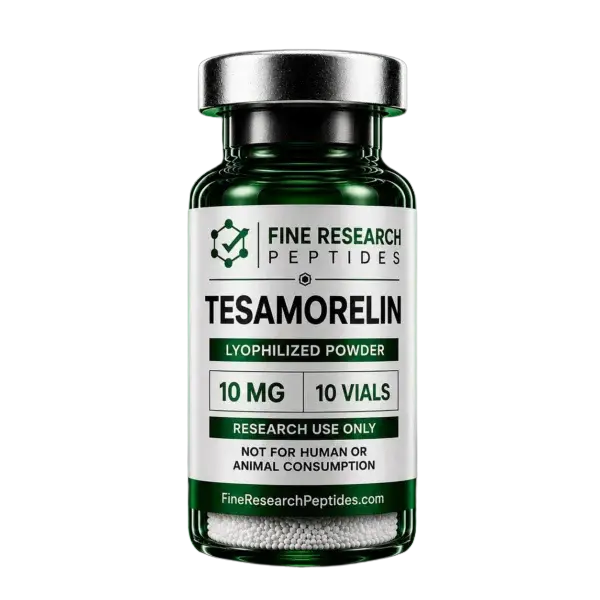
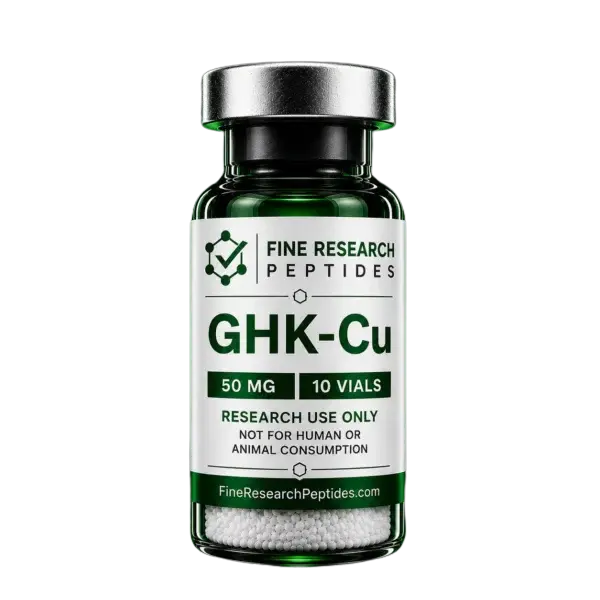
Ordering, shipping and handling, in plain language. Still
unsure? Contact support.
All products are supplied strictly for laboratory research. Not for human or animal consumption.
Ordering is simple.
It is a straightforward way to buy peptides online with confidence, knowing everything is supplied strictly for laboratory research and independently verified.
Certain peptide-based medications have received FDA approval for specific clinical uses, but the research peptides sold by Fine Research Peptides are not FDA approved and are not intended for human or animal use.
Yes. All products are shipped in stable lyophilized (freeze-dried) form and packaged to shield them from direct sunlight and unnecessary exposure during transit, helping preserve integrity until they reach your lab.
Once reconstituted, peptides are typically kept refrigerated between 2-8°C for short-term laboratory use.
Research use only.